
You control suspension stability by managing zeta potential, which quantifies the effective surface charge influencing particle repulsion and aggregation. High magnitude zeta potential enhances electrostatic repulsion, preventing clumping. Factors like pH, ionic strength Zetasizer, and surfactant adsorption alter this charge, directly impacting stability. Measuring zeta potential through electrophoretic mobility provides insight into these interactions. By tuning these parameters, you optimize suspension behavior. Further exploration uncovers advanced modification strategies and practical applications enhancing formulation performance.

What Is Zeta Potential?
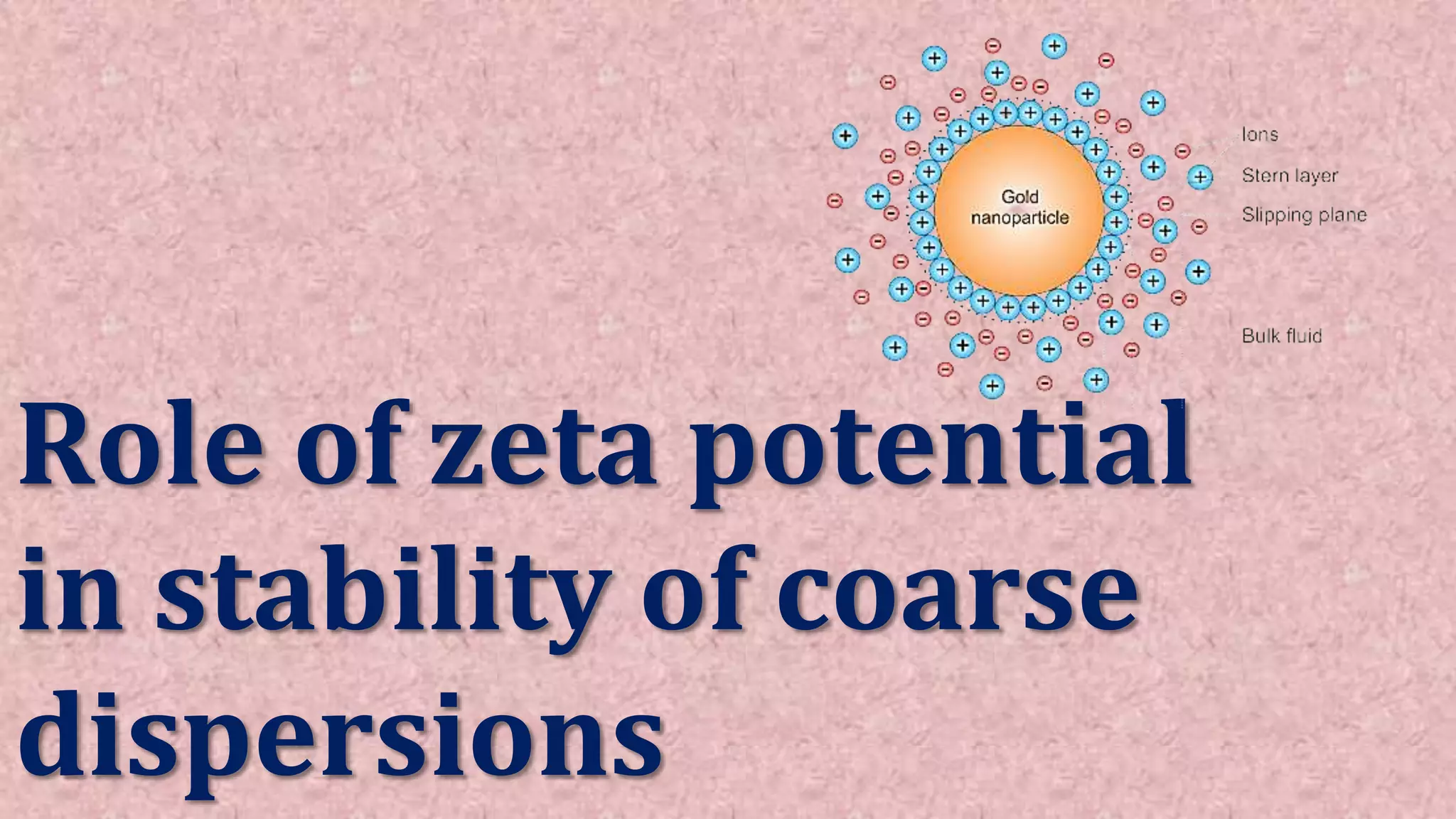
Zeta potential is a key parameter that quantifies the electrical charge at the interface between a solid particle and its surrounding liquid, influencing how particles interact in suspension. When you measure zeta potential, you’re evaluating the electrokinetic potential generated by the surface charge of particles within the liquid medium. This potential arises because the particle’s surface charge attracts a layer of counterions Lab Alliance, creating an electrical double layer. The slipping plane within this layer defines the zeta potential, which reflects the particle’s effective charge in motion. Understanding this parameter is essential for predicting particle behavior, including aggregation or dispersion tendencies. By analyzing zeta potential, you gain insight into the stability of suspensions, enabling precise control over formulation and processing conditions without unnecessary constraints.
Factors Affecting Zeta Potential in Suspensions
Several variables influence the magnitude and sign of the electrical potential at the particle-liquid interface, directly impacting suspension stability. You’ll find that ionic strength conspicuously alters the thickness of the electrical double layer surrounding particles, compressing it as ionic concentration increases, which reduces zeta potential magnitude. Additionally, surface chemistry plays a critical role; functional groups on particle surfaces determine charge density and distribution, affecting zeta potential’s baseline value. Changes in pH modify surface ionization states, shifting potential accordingly. Moreover, specific adsorption of ions can reverse charge polarity, drastically altering particle interactions. By understanding how ionic strength and surface chemistry govern zeta potential, you gain precise control over suspension behavior, enabling tailored stability adjustments without compromising system freedom or flexibility.
How Zeta Potential Influences Particle Interaction
You’ll find that zeta potential governs the electrostatic repulsion between particles, directly affecting their tendency to aggregate. When the potential is sufficiently high, it prevents particle aggregation by maintaining separation forces that counteract van der Waals attractions. This balance is critical for ensuring colloidal stability in suspensions under varying conditions.
Electrostatic Repulsion Effects
Although you might not always notice it, the electrical charges at the particle surface critically determine how particles interact in suspension. Zeta potential quantifies this charge, influencing the magnitude of electrostatic repulsion between particles. When particles possess high zeta potential values, strong repulsive forces develop, preventing close approach and promoting stability. You must consider ionic strength, as increased ion concentration compresses the electrical double layer, diminishing double layering effects and reducing repulsion. This compression allows particles to approach more closely, potentially destabilizing the suspension. By understanding how zeta potential governs electrostatic repulsion and how ionic strength modulates double layering, you gain precise control over particle interactions. This insight empowers you to predict suspension behavior under varying conditions without constraining your experimental freedom.
Particle Aggregation Prevention
Understanding how zeta potential governs electrostatic repulsion naturally leads to examining its role in preventing particle aggregation. You’ll find that maintaining a high magnitude of zeta potential guarantees particles carry sufficient charge to repel each other, reducing collision frequency and aggregation probability. Surface modification techniques can amplify this effect by introducing charged functional groups, enhancing electrostatic barriers. Additionally, steric hindrance plays a complementary role by physically obstructing particle approach through adsorbed polymers or surfactants on the particle surface. This dual mechanism—electrostatic repulsion governed by zeta potential and steric stabilization via surface modification—allows you to finely tune suspension stability. By controlling these parameters, you effectively minimize irreversible aggregation, preserving discrete particle dispersion and maximizing the freedom to manipulate colloidal systems for desired applications.
Impact on Colloidal Stability
Because zeta potential directly reflects the surface charge of particles, it critically determines the nature and strength of interparticle interactions in colloidal systems. You’ll find that the balance of repulsive and attractive forces, governed by surface charge and double layer dynamics, dictates whether particles remain dispersed or aggregate. When zeta potential is high, electrostatic repulsion stabilizes the suspension, preventing coagulation. Conversely, low zeta potential weakens repulsive barriers, increasing aggregation risk. Understanding these interactions empowers you to manipulate colloidal stability effectively.
Key factors influencing colloidal stability include:
- Magnitude of surface charge
- Thickness and composition of the electrical double layer
- Ionic strength of the medium
- Particle size and distribution
- pH-dependent charge variations
Measuring Zeta Potential: Techniques and Tools
When evaluating suspension stability, measuring zeta potential accurately is essential to predicting particle behavior in a given medium. You’ll primarily rely on electrophoretic mobility measurements, which reflect the velocity of charged particles under an applied electric field. The laser Doppler velocimetry technique is widely employed here; it uses the Doppler shift of scattered laser light to precisely determine particle velocity. Instruments integrating laser Doppler methods provide rapid, reproducible zeta potential readings with minimal sample preparation. Additionally, you should consider factors like temperature control and sample conductivity, as they influence measurement accuracy. By selecting appropriate tools and understanding the underlying principles of electrophoretic mobility and laser Doppler analysis, you gain precise insight into the electrokinetic properties dictating suspension stability, empowering you to make informed decisions without unnecessary constraints.
Strategies to Improve Suspension Stability via Zeta Potential
To enhance suspension stability, you can manipulate zeta potential by adjusting pH levels to shift particle surface charge, thereby increasing electrostatic repulsion. Adding electrolyte solutions helps control ionic strength, which influences the thickness of the electrical double layer and particle interactions. Additionally, employing surfactants modifies surface properties, stabilizing suspensions through steric or electrostatic mechanisms.
Adjusting Ph Levels
In adjusting pH levels, you directly influence the surface charge of particles, thereby modifying their zeta potential and suspension stability. By precisely controlling pH, you shift the ionization states of particle surfaces, optimizing repulsive forces to prevent aggregation. Employing accurate pH sensors allows real-time monitoring, while buffer optimization maintains consistent conditions, essential for reproducibility.
Consider these key strategies:
- Utilize high-precision pH sensors for immediate feedback.
- Select buffers that stabilize pH near desired zeta potential values.
- Adjust pH incrementally to identify optimal stability points.
- Monitor zeta potential changes corresponding to pH shifts.
- Avoid pH extremes that induce particle charge neutralization.
Mastering pH adjustments empowers you to finely tune suspension behavior, enhancing stability without compromising system freedom or introducing extraneous variables.
Adding Electrolyte Solutions
Although adjusting pH plays a critical role in managing suspension stability, adding electrolyte solutions offers another effective approach to modulate zeta potential. When you introduce electrolytes, you increase the ionic strength of the suspension medium, which directly influences the electrical double layer surrounding particles. This elevated ionic strength enhances charge screening, effectively compressing the double layer and reducing the magnitude of the zeta potential. By carefully controlling electrolyte concentration, you can fine-tune interparticle repulsion forces, thereby balancing attractive and repulsive interactions. This strategy allows you to either stabilize or destabilize suspensions, depending on your goals. However, it’s essential to avoid excessive electrolyte addition, as over-screening may lead to aggregation. Understanding these mechanisms grants you precise control over suspension behavior through systematic modulation of ionic strength and charge screening.
Utilizing Surfactants
Harnessing surfactants provides a targeted method to modify zeta potential and enhance suspension stability by adsorbing onto particle surfaces. When you introduce surfactants, surfactant adsorption alters the surface charge, shifting the zeta potential to values that favor repulsion and prevent aggregation. Additionally, micelle formation in the medium can solubilize impurities, indirectly stabilizing the suspension. To optimize this approach, consider:
- Selecting surfactant type (anionic, cationic, nonionic) based on particle charge
- Controlling surfactant concentration to avoid over-saturation or micelle dominance
- Monitoring zeta potential shifts to assess adsorption efficiency
- Evaluating the impact of micelle formation on suspension dynamics
- Balancing electrostatic and steric stabilization effects introduced by surfactants
Applications of Zeta Potential in Industry and Research
When evaluating colloidal systems, understanding zeta potential is crucial because it directly influences particle interactions and suspension stability. In industry, you’ll find zeta potential indispensable for optimizing surface modification processes, ensuring particles repel adequately to prevent aggregation. This control enhances product consistency, especially in paints and coatings. In research, zeta potential guides nanoparticle delivery system design, where precise charge manipulation improves targeting efficiency and bioavailability. You can utilize zeta potential measurements to fine-tune formulation parameters, balancing electrostatic forces to maintain stable suspensions under varying conditions. By mastering these applications, you gain the freedom to innovate across diverse fields—from pharmaceuticals to environmental science—leveraging zeta potential as a fundamental analytical tool for both development and quality control.
Conclusion
Understanding zeta potential is essential for controlling suspension stability. You’ll recognize that factors like pH, ionic strength, and particle surface chemistry directly impact zeta potential, influencing particle interactions such as aggregation or dispersion. By accurately measuring and manipulating zeta potential, you can strategically enhance suspension stability tailored to your application. This analytical approach not only optimizes formulation but also advances industrial and research outcomes where precise colloidal control is essential.


